
How Rotomolded Components Improve Equipment Uptime in Utility Fleets
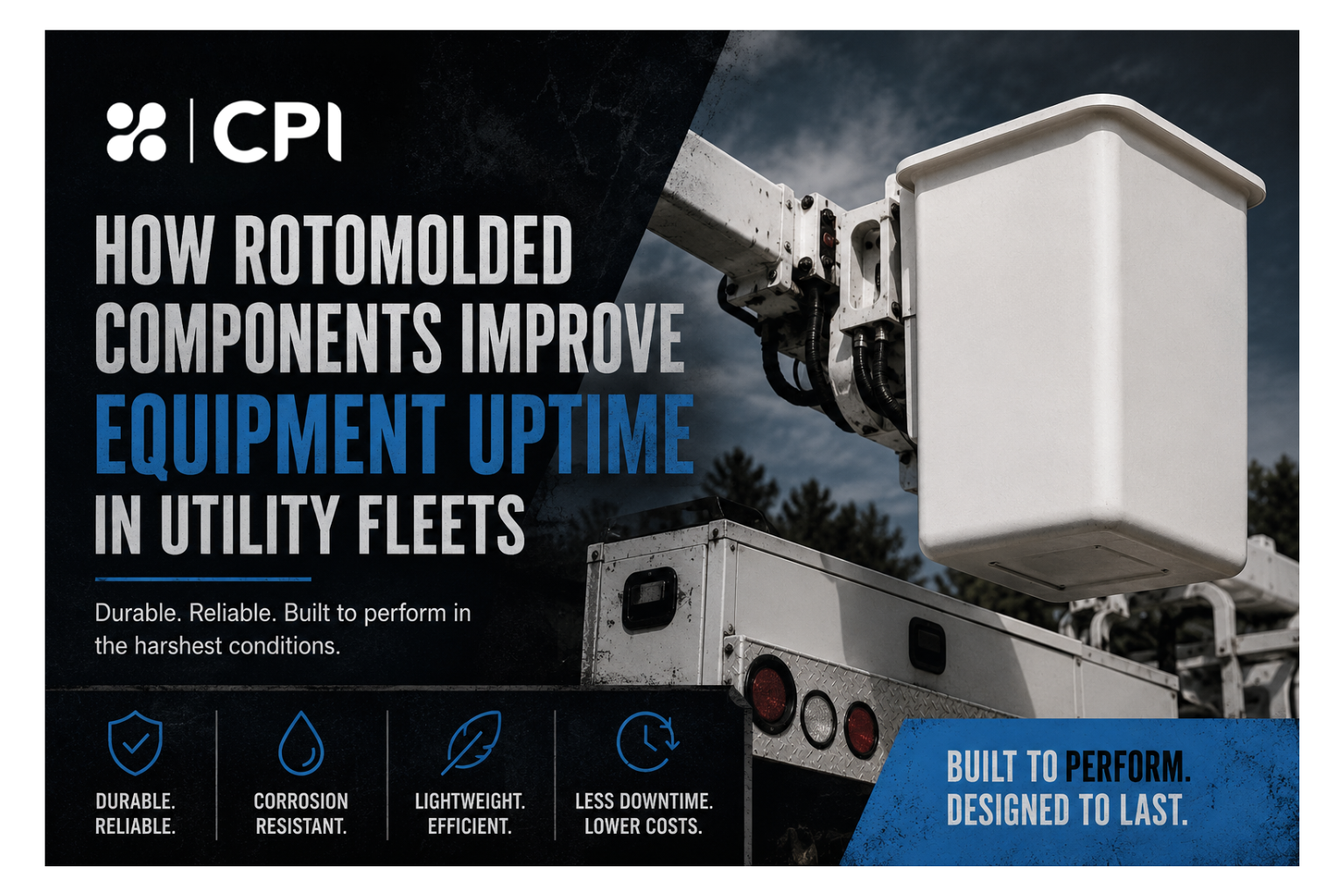
For utility fleets, uptime is everything. Whether crews are responding to outages, performing routine maintenance, or supporting infrastructure upgrades, equipment reliability directly impacts productivity, safety, and operational costs.
That’s why more OEMs and fleet managers are turning to rotomolded plastic components for aerial lifts, service bodies, and industrial equipment. Compared to traditional fabricated metal or lower-grade molded alternatives, rotomolded parts offer a unique combination of durability, corrosion resistance, and design flexibility that helps reduce downtime and extend equipment life.
Why Equipment Uptime Matters
Every hour a truck or aerial lift is out of service costs money. Unplanned maintenance can lead to:
- Delayed field work
- Increased labor costs
- Missed service windows
- Reduced fleet availability
- Higher replacement expenses
For utility and industrial fleets operating in harsh environments, component failure is often tied to exposure to:
- UV radiation
- Road salt and chemicals
- Moisture and corrosion
- Heavy vibration
- Impact damage
- Extreme temperatures
The materials used in equipment components play a major role in how well fleets handle those conditions over time.
The Advantage of Rotomolded Components
Rotational molding, or rotomolding, is a manufacturing process that produces hollow, seamless plastic parts with exceptional durability and consistency. The process is especially well suited for large industrial components used in demanding outdoor applications.
At CPI Products, rotomolded components are commonly used for:
- Aerial lift buckets
- Utility equipment housings
- Protective covers
- Storage compartments
- Industrial enclosures
- Custom fleet components
Because these products are molded as a single seamless piece, they eliminate many of the weak points found in assembled or welded alternatives.
Corrosion Resistance Reduces Maintenance
One of the biggest causes of equipment degradation in utility fleets is corrosion. Metal components exposed to moisture, road chemicals, and environmental contaminants require ongoing maintenance and eventual replacement.
Rotomolded polyethylene components are naturally resistant to:
- Rust
- Corrosion
- Chemical exposure
- Moisture intrusion
This makes them ideal for utility trucks and aerial equipment operating year-round in challenging environments.
For fleet operators, that means:
- Fewer repairs
- Lower maintenance costs
- Longer service life
- Reduced downtime
Impact Resistance in Real-World Conditions
Field equipment takes abuse every day. Tools shift during transport, equipment encounters debris, and operators work in tight spaces where impacts happen regularly.
Rotomolded parts are designed to absorb impact without cracking or denting like traditional materials. The flexibility of polyethylene allows components to withstand repeated stress while maintaining structural integrity.
This is especially important for:
- Bucket truck components
- Equipment covers
- Tool storage systems
- Access panels
- Outdoor utility enclosures
Durable molded parts help fleets avoid frequent replacements caused by cosmetic or structural damage.
Seamless Construction Improves Reliability
Unlike fabricated assemblies that rely on welds, fasteners, or bonded seams, rotomolded parts are manufactured as one continuous piece.
This seamless construction helps eliminate common failure points such as:
- Cracked welds
- Water intrusion
- Loose hardware
- Joint separation
- Stress fractures
For utility applications exposed to vibration and environmental stress, seamless construction significantly improves long-term reliability.
Lightweight Components Improve Efficiency
Weight matters in fleet operations. Heavier equipment can reduce payload capacity, impact fuel efficiency, and increase wear on vehicles.
Rotomolded plastic components are substantially lighter than comparable metal alternatives while still maintaining strength and durability.
Benefits of lightweight components include:
- Improved fuel efficiency
- Easier installation
- Reduced vehicle wear
- Increased payload flexibility
- Better handling and maneuverability
For OEMs, this also creates more flexibility in equipment design and integration.
Custom Rotomolded Solutions for OEM Applications
Another major advantage of rotomolding is design flexibility. Complex shapes, integrated features, and custom geometries can often be produced without extensive secondary fabrication.
This allows manufacturers to create parts tailored to specific equipment needs, including:
- Integrated mounting features
- Ergonomic designs
- Specialized storage compartments
- Custom branding and colors
- Application-specific enclosures
At CPI Products, custom rotomolded solutions are developed for demanding industrial and utility applications where performance and reliability are critical.
Supporting Long-Term Fleet Performance
Utility fleets need components that perform reliably over years of continuous use. Rotomolded products help support long-term uptime by combining:
- Corrosion resistance
- Impact durability
- Lightweight construction
- Seamless manufacturing
- Low maintenance requirements
As fleets continue prioritizing durability, operational efficiency, and reduced lifecycle costs, rotomolded components are becoming an increasingly important part of modern equipment design.
Partner With CPI Products
CPI Products manufactures durable rotomolded components for utility, industrial, and OEM applications. From aerial lift buckets to custom molded equipment solutions, our products are built to perform in demanding field environments.
If you’re looking for reliable molded components that support equipment uptime and long-term fleet performance, contact CPI Products to learn more about our capabilities and custom manufacturing solutions.