
Engineering Better Performance with Rotomolded Design
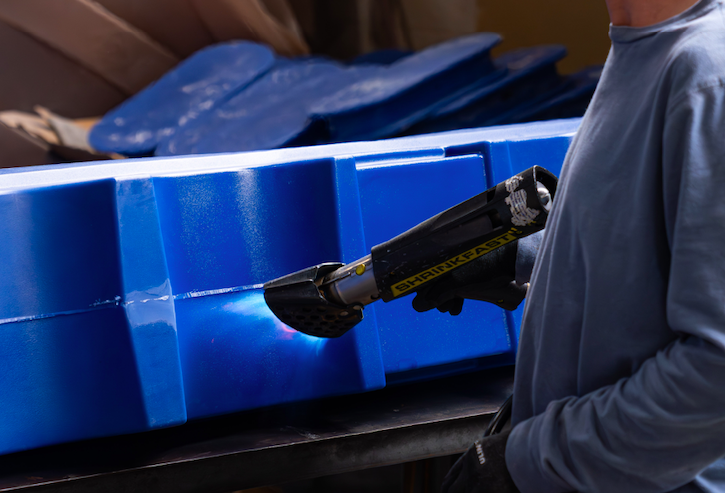
Rotational molding has become a go-to manufacturing method for OEMs that need durable, seamless, and structurally reliable plastic components, especially for larger or low-to-medium-volume applications. But unlike processes such as injection or blow molding, rotomolding has its own design rules and engineering considerations. When OEMs understand these principles early in the design cycle, they’re able to achieve better performance, better tooling outcomes, and more efficient production.
CPI Products collaborates with OEMs at every stage, from concept evaluation to full-scale production, to ensure parts are engineered not just to function, but to last. This educational guide provides an in-depth look at the key design-for-rotomolding principles that consistently lead to stronger, more reliable components.
Understanding How Rotational Molding Works (and Why Design Matters)
Rotational molding uses biaxial rotation and heat to melt resin powder evenly along the interior of a mold. Because there is no pressure involved, the process produces:
- Uniform, stress-free walls
- Hollow parts without weld lines
- Seamless shapes
- Excellent impact resistance
But the same low-pressure nature also means the resin must be able to flow purely by gravity and rotation. If the geometry creates dead zones, tight corners, or inaccessible pockets, wall thickness inconsistency becomes more likely.
This makes design the single most important performance driver in rotomolding, more than material selection, tooling, or cycle optimization.
Engineering for Uniform Wall Thickness
Uniform wall thickness is one of the biggest advantages of rotomolding, but achieving it depends on geometry.
Design strategies that improve uniformity:
- Use generous radii rather than sharp internal corners, which prevent resin from distributing evenly.
- Avoid sudden transitions between thick and thin areas to reduce cooling stress.
- Ensure no areas are isolated from the general flow path of the resin.
- Keep walls as consistent as possible, small fluctuations are acceptable, but extreme changes can cause warp or weak points.
When walls remain uniform, components typically benefit from:
- Better dimensional stability
- Fewer stress concentration points
- Stronger performance under load
- Lower material usage and cost
Adding Strength Through Structural Features
Because rotomolding does not use injected pressure, structural features such as ribs, contours, and bosses, must be intentionally designed.
Ribbing
Ribs are an extremely efficient way to improve stiffness without thickening the entire part.
Best practices include:
- Using broad, shallow ribs, which allow resin to coat consistently
- Designing ribs with tapered bases to reduce stress concentration
- Avoiding narrow, deep ribs that impede material flow
- Matching rib thickness to wall thickness to avoid differential cooling
Integrating Metal Inserts
Rotomolded parts often require threaded fasteners, load-bearing mounting points, or connection features.
Design considerations:
- Inserts must be designed for molded-in placement, not post-installed shrink-fit
- The insert’s geometry should allow resin to fully encapsulate it
- Consider alignment features to maintain repeatability
Curvature and Contouring
Natural curves increase resistance to bending or collapse. Many high-performance rotomolded components use structural curvature to achieve strength without added mass.
Designing Functional Features Into the Mold
Because rotomolding allows the creation of seamless hollow bodies, engineers often integrate functional features directly into the part, reducing assembly and minimizing points of failure.
Common integratable features:
- Molded-in threads (for non-load-bearing applications)
- Baffles (for tanks or fluid-handling components)
- Flow channels, handles, and recesses
- Mounting flanges and bosses
- Molded-in logos and branding
Each feature must be designed so:
- Resin can flow around it
- No undercuts trap material or complicate mold release
Material Selection and Its Impact on Performance
Rotational molding uses powdered thermoplastics, with polyethylene (PE) being the most common because of its:
- Impact resistance
- Chemical durability
- UV stability when properly compounded
- Suitability for low-pressure molding
Material choice affects:
- Stiffness and load-bearing ability
- Resistance to cracking
- Outdoor longevity
- Heat tolerance
OEMs often underestimate how much performance gain can come from choosing the right resin early.
Designing for Manufacturability and Efficient Tooling
Rotomolded parts require tooling that supports biaxial rotation, proper venting, and long-term durability. Design decisions directly impact tooling complexity and cost.
Key manufacturability guidelines:
- Avoid deep, narrow cavities that resin powder cannot reliably reach.
- Design parting lines with draft angles to ensure clean release and consistent mold fit.
- Consider multi-piece tooling when geometry prevents a simple parting line.
- Account for predictable shrinkage of polyethylene during cooling.
- Ensure the design supports even heat distribution to avoid warping.
Prototyping and Performance Validation
Prototyping is often underutilized in rotomolding but can significantly reduce risk.
Prototypes help OEMs evaluate:
- Wall thickness distribution using cutaway analysis
- Structural performance under expected load
- Ergonomics, fit, and functional usability
- Resin behavior within complex geometries
Partnering to Engineer Higher-Performing Rotomolded Components
CPI Products transforms designs into durable, high-performing rotomolded components tailored to real-world application demands. OEMs seeking long-term durability and predictable performance benefit from aligning design and manufacturing early, and CPI is built for that level of partnership.
Learn more about our capabilities at CPIProducts.com.